Fat Wallet Syndrome Is Real: Why Your Back-Pocket Wallet Hurts
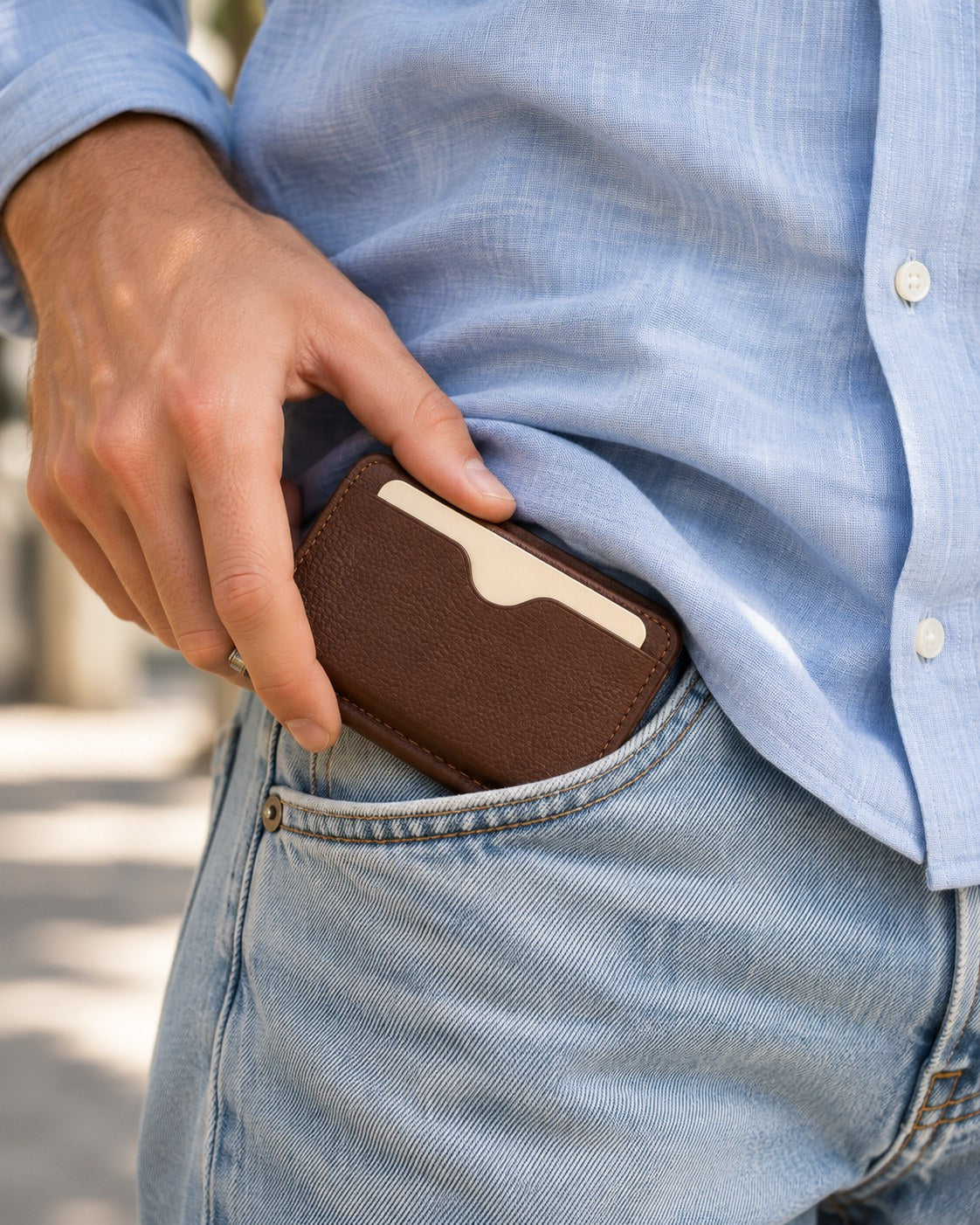
Doctors have a name for it. Several, actually: "credit-carditis", "wallet neuritis", "fat wallet syndrome". They all describe the same slightly embarrassing problem: sitting on a thick wallet in your back pocket can irritate the big nerve that runs down your leg. Here is what the medical literature actually says, and what to do about it.
This article is general information, not medical advice. If you have back or leg pain, see a doctor.
Is fat wallet syndrome real?
Yes, although it is documented mainly through case reports rather than large studies. The idea goes back decades:
- 1966: a letter in the New England Journal of Medicine coined the term "credit-carditis" after a lawyer developed sciatica from his overstuffed wallet.
- 1978: a report in JAMA described two cases of "credit-card-wallet sciatica" and noted that even a fairly small wallet could cause symptoms.
- 2016: a case series of 31 patients with piriformis-related pain listed a large wallet in the back pocket on the painful side as a contributing factor.
- 2018: a paper in Current Rheumatology Reviews, "Wallet Neuritis – An Example of Peripheral Sensitization", described three cases. The treatment was refreshingly low-tech: stop carrying the wallet there (the authors call it a "wallectomy") and do piriformis stretches.
A 2020 review of the literature points out that the evidence is still mostly small case series, and that nobody knows exactly how thick a wallet or how many hours of sitting it takes. Harvard Health's "Ask Dr. Rob" column lists a thick back-pocket wallet as one cause of piriformis syndrome and advises not carrying it there.
How a wallet can hurt your back and leg
Your sciatic nerve runs through the buttock, under (and in some people through) the piriformis muscle. Sit on a lump of leather, cards and receipts, and you press that area against a hard seat for hours. You also sit tilted, with one hip higher than the other. The result can feel like sciatica from the spine: pain, tingling or numbness down the back of the leg, often worse when sitting and better when standing.
Long drives and desk jobs are the classic setting. So is the person who keeps every receipt since 2019 "just in case".
The fix: a slimmer wallet, in the front pocket
- Take the wallet out before you sit, especially in the car. The simplest fix there is.
- Move it to a front pocket. You do not sit on it, and pickpockets have a harder time too.
- Make it thin. One honest caveat: a 1984 letter in JAMA described thigh nerve pain from a thick wallet carried in a front pocket. Moving a brick to the front just moves the brick. Thickness is the real problem.
- Clear it out. Old receipts, expired cards and loyalty cards you never use can usually go. Most people only need a handful of cards (here is how to decide).
What "slim enough" looks like
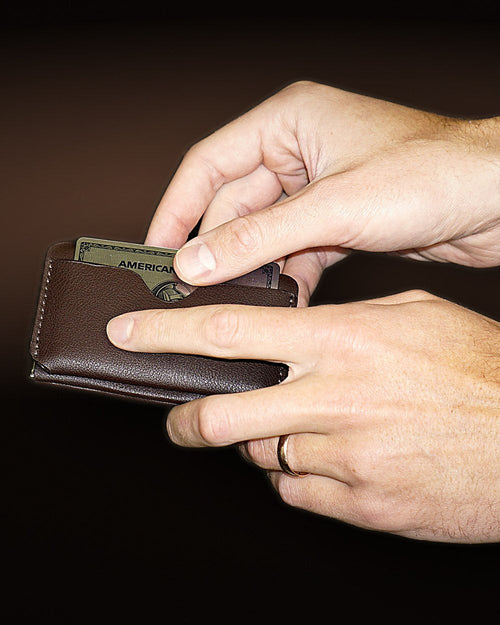
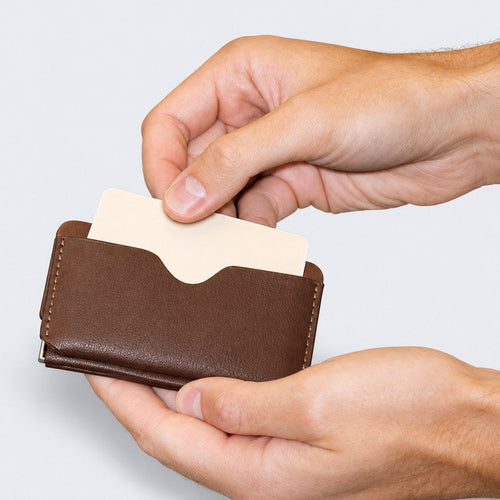
A classic bifold stuffed with cards and cash easily reaches 25–30 mm. A good front-pocket wallet stays around 10–15 mm even when it is loaded. The LETWAL Click Wallet, for example, is 12 mm thin and still holds up to 6 cards, folded cash and 10+ coins or a key, because the coins sit in their own small pouch instead of bulging out the middle.
FAQ
Can a wallet cause sciatica?
It can cause sciatica-like symptoms by pressing on the sciatic nerve and piriformis area when you sit on it. Doctors have reported this since the 1960s. Other causes, like a disc problem, are far more common, so get persistent pain checked.
Is it better to keep your wallet in your front pocket?
For sitting comfort, yes, as long as the wallet is slim. A thick wallet in a front pocket can press on the nerve on the front of the thigh instead.
How long does wallet sciatica take to go away?
In published cases symptoms usually improved after the person stopped sitting on the wallet, but recovery times vary. If pain lasts or you feel weakness, see a doctor.
Sources
- Siddiq MAB, Jahan I, Masihuzzaman SM. Wallet Neuritis – An Example of Peripheral Sensitization. Current Rheumatology Reviews 14(3):279–283, 2018. PMID 28294069. (Cites the 1966 NEJM "credit-carditis" letter and the 1978 JAMA report.)
- Scoping review on wallet-related sciatic nerve compression, PubMed Central, 2020.
- Case series of 31 patients with piriformis syndrome, European Journal of Orthopaedic Surgery & Traumatology, 2016.
- Orton D. Meralgia paresthetica from a wallet. JAMA, 1984.
- Harvard Health Publishing, Ask Dr. Rob about piriformis syndrome.

Carry less
LETWAL Click Wallet
12 mm thin pebbled leather. Up to 6 cards, folded cash and 10+ coins or a key. Magnetic snap, free shipping, 30-day money-back.
See the wallet